THE MEALTIME ROADMAP
When eating feels hard, the behavior is only part of the story.
What you’ve noticed gives us important information about
where your child is struggling.
The next question is even more important:
Why is eating so difficult for them?
Two children can have the exact same feeding behavior...
...and need completely different solutions.
- One child avoids food because eating hurts.
- Another because their nervous system feels overwhelmed.
- Another because chewing is exhausting.
- Another because mealtimes have become stressful over time.
The behavior looks the same.
The reason behind it doesn't.
That's why we don't begin by guessing which feeding strategy to try.
We begin by figuring out what's actually making eating difficult for your child.
Why This Has To Be Personal
Why one-size-fits-all feeding advice usually doesn’t work.
Most advice starts with what your child should do:
take a bite, sit longer, try something new, or keep eating.
But two children can refuse the same food for completely different reasons.
So the solution can’t be the same either.
If the real problem is hidden...
then more pressure, more rewards, more exposure, or more “just try it” moments may not help. In some children, those strategies can even make food feel less safe.
But once you know what’s driving it...
you can stop guessing and start working on the right things first. That’s when progress starts to feel clearer, calmer, and much more possible.
The Roadmap exists so you don’t have to guess which version of “picky eating” your child has.
It helps identify what’s actually making eating hard, then turns that information into a clear plan your family can follow.
Don’t Skip This Part
You may not have to pay the full cost yourself.
Many parents assume specialized feeding programs have to be paid entirely out of pocket. Sometimes that’s true. But sometimes it isn’t.
What is a Single Case Agreement?
A Single Case Agreement is a process some insurance companies use when they don’t have an in-network provider who offers the specialized care a child needs.
In other words, if there isn’t someone in your network who can truly address your child’s unique feeding challenges, your insurance company may consider covering care from a specialized provider outside their network instead.
Why have families been approved to work with Foodology?
Because the Mealtime Roadmap is different from traditional feeding therapy.
Rather than focusing on just one piece of the puzzle, we evaluate the full feeding picture — including sensory processing, oral-motor skills, gut health, nervous system regulation, mealtime environment, and learned feeding patterns. For some children, that comprehensive approach simply isn’t available through their in-network options.
That’s why every Roadmap family receives our Insurance Approval Toolkit.
- ✓ Step-by-step guidance through the Single Case Agreement process
- ✓ Letter templates
- ✓ Documentation checklists
- ✓ Our specialized provider packet explaining our clinical model, specialized training, research, and medical necessity
This is the same kind of documentation families have successfully used when requesting insurance consideration.
Want to explore insurance first?
We also made the toolkit available separately. Whether you work with us or another provider, you deserve to understand every option available to your family.
Get the Insurance Toolkit Here →The toolkit cannot guarantee approval, reimbursement, or coverage. It is designed to help families understand the process, prepare documentation, and present the strongest possible case to their insurance company.
See what's possible for your child
Before families work with us, they often feel stuck — not knowing what their child could actually achieve. These real stories show the transformations we see regularly. Find the story that matches yours.
The child who was terrified of new foods
Severe reflux + food fear + nervous system dysregulation
The child who lived on beige foods
Sensory sensitivities + oral-motor weakness + gut imbalance
The child who could detect every tiny change
Brand loyalty + sensory refinement + parental anxiety
The child who was never hungry at dinner
Gut signaling issues + constant snacking + parental trauma
The child who needed an iPad to eat
Weak oral motor skills + poor interoception + gut imbalance
The child everyone said was fine
Hidden gut inflammation affecting mood, focus, behavior
The child with only two foods left
Severe gut inflammation + behavior dysregulation attributed to ADHD
The child who melted down around food
Gut inflammation + food sensitivities + nervous system dysregulation
The child who needed total control
Sensory rigidity + heightened smell sensitivity + coping mechanisms
The child everyone blamed the autism diagnosis for
Autism + unaddressed gut health creating compounding issues
The child who gagged at everything
Weak oral motor skills + sensory hypersensitivity + gut inflammation cycle
Looking Deeper
Sometimes the answer is hiding where you can’t see it.
After working with so many children, we started noticing something interesting: children who looked almost identical at the table often had completely different reasons for struggling.
It’s always interesting the way some kids will...
Say they’re hungry, then stop eating after two bites.
Ask for milk or snacks all day, but struggle with actual meals.
Refuse foods they ate last week, even when nothing obvious changed.
Complain about belly pain, constipation, reflux, or feeling full quickly.
Gag, shut down, or panic around food for reasons that don’t seem to make sense from the outside.
That made us ask a better question.
What if the behavior isn’t the real problem?
What if the behavior is a clue about something happening underneath?
Sometimes we find exactly what we suspected.
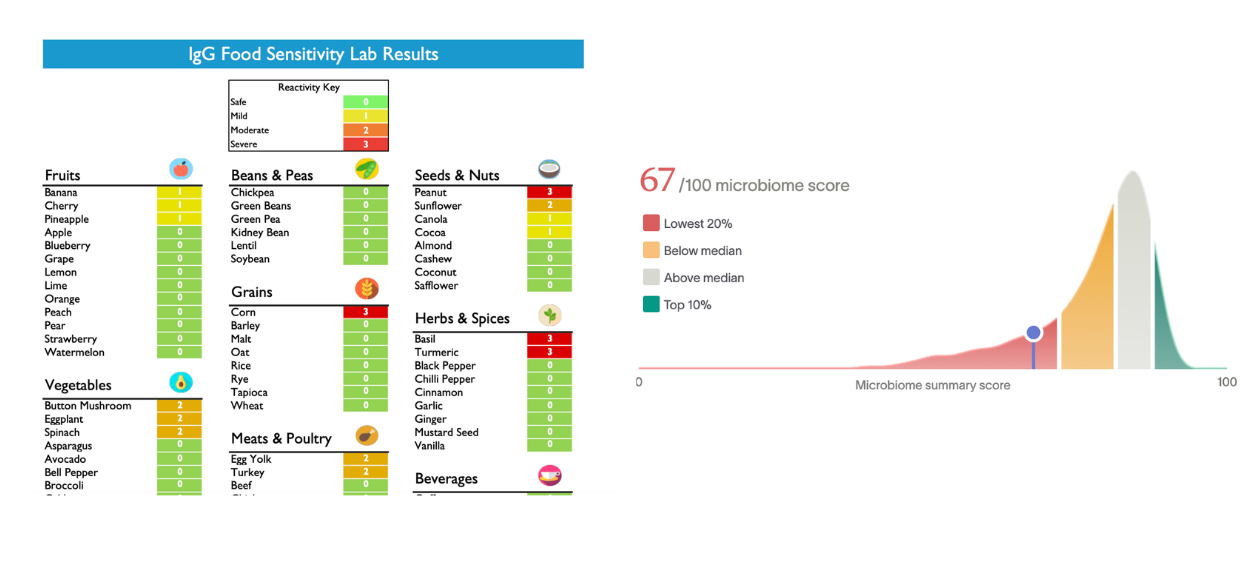
Lab testing may help explain why a child feels full quickly, craves milk constantly, avoids certain foods, struggles with constipation, or seems uncomfortable after eating.
Sometimes we rule things out.
That can be just as useful. If testing doesn’t point to a body-based driver, we can stop chasing the wrong problem and focus more clearly on fear, anxiety, OCD patterns, sensory needs, or learned mealtime stress.
The goal isn’t to prove every child has gut issues.
The goal is to understand whether something inside the body is making eating harder — or whether we should focus our energy somewhere else.
Either way, we stop guessing.
These are real examples of what we’ve uncovered.
OUR PHILOSOPHY
We have one question before making
any recommendation.
"What evidence do we have that this is the right place to start?"
Why that question matters...
Imagine two children.
Both refuse vegetables.
Both gag.
Both cry at dinner.
From the outside... they look almost identical.
But what if they aren't struggling for the same reason?
If we assume the problem is sensory...
...but the real issue is chronic constipation, gut inflammation, or a child who feels painfully full after two bites...
we could spend months working on the wrong thing.
And if we assume the problem is inside the body...
...when the biggest driver is actually fear, OCD, or anxiety around eating...
we could spend months chasing the wrong answer there too.
The biggest mistake isn't choosing the wrong treatment.
It's choosing the right treatment... for the wrong child.
That's why every piece of information we collect has one purpose:
Reduce uncertainty.
Sometimes that evidence comes from watching your child eat. Sometimes it comes from oral-motor testing. Sometimes it comes from sensory observations. And sometimes... the answers are hiding inside the body.
What changes when you finally stop guessing.
Families often come to us after trying everything else. The Roadmap helps them understand what was really happening beneath the surface.
We were stuck in a cycle of frustration trying everything we could think of but nothing seemed to work. After taking the quiz and realizing our daughter's picky eating might be more than just a phase, we decided to invest in the Roadmap. This was a game-changer. The food sensitivities uncovered had been missed before, and we also discovered oral-motor issues affecting her ability to chew and swallow properly. The report was incredibly thorough and gave us actionable steps. Most importantly, we felt supported the entire time. Our daughter is eating more variety now and we finally feel confident about how to help her.
I was completely overwhelmed. Every meal felt like a battle and food had become the enemy in our home. My daughter's refusal to eat or try anything new was causing so much stress. Then we found the Roadmap. Christine’s approach was completely different from anything we had tried before. Instead of forcing bites, we started understanding why food felt unsafe for my daughter. Within weeks meals felt calmer and she slowly started trying new things without pressure. I finally feel hope again — and we can actually enjoy meals as a family.